What Your Pet's Bad Breath Is Trying to Tell You
Bad breath isn't just unpleasant — it's a warning sign. Explore the connection between oral health and systemic diseases in pets.

Nobody wants to be face-to-face with a pet whose breath could peel paint. But halitosis — the clinical term for bad breath — is far more than a nuisance. It is a diagnostic signal, a biological alarm bell that your pet's body is ringing to tell you that something is wrong beneath the surface. In companion animals, persistent bad breath is abnormal. It is not a natural consequence of eating kibble, aging, or being a dog. It is, in the vast majority of cases, the scent of bacterial decomposition — and understanding what it means can quite literally save your pet's life.
The most common cause of halitosis in pets is periodontal disease, which affects over 80% of dogs and 70% of cats by age three. The odor originates from the metabolic byproducts of anaerobic bacteria living beneath the gumline. As these bacteria break down food particles, dead tissue, and proteins in the oral environment, they produce volatile sulfur compounds — primarily hydrogen sulfide, methyl mercaptan, and dimethyl sulfide. These are the same compounds responsible for the smell of rotting eggs, decaying meat, and sewage. When you smell your pet's breath and instinctively pull away, your olfactory system is doing exactly what it evolved to do: detecting the chemical signature of bacterial decay and signaling your brain that something is wrong.
The intensity of the odor often correlates with the severity of the underlying disease. Mild, occasional bad breath may indicate early-stage gingivitis — inflammation of the gums caused by plaque bacteria that is still reversible with proper cleaning. Persistent, strong odor — the kind that fills a room — typically signals established periodontal disease with active bacterial infection beneath the gumline. A suddenly worsening odor, particularly if accompanied by drooling, pawing at the mouth, or reluctance to eat, may indicate a dental abscess, a fractured tooth with pulp exposure, or an oral tumor. Each of these conditions requires immediate veterinary attention.
But bad breath does not always originate in the mouth. The oral cavity is connected to the respiratory and gastrointestinal systems, and systemic conditions can produce distinctive breath odors that serve as diagnostic clues. A sweet or fruity odor may indicate diabetic ketoacidosis, a life-threatening condition in which the body, unable to use glucose, breaks down fat and produces ketones as a byproduct. A urine-like or ammonia breath odor can signal kidney failure, as urea — normally excreted in urine — builds up in the blood and is broken down by oral bacteria into ammonia. A foul, putrid odor that does not improve with dental cleaning may indicate gastrointestinal disease, liver dysfunction, or, in cats, the presence of a foreign body trapped in the mouth or esophagus.
The connection between oral health and systemic disease is not theoretical — it is well-documented and bidirectional. Oral bacteria from periodontal disease enter the bloodstream through inflamed gum tissue and travel to distant organs. In the kidneys, they contribute to immune complex deposition and progressive renal damage. In the heart, they colonize the mitral valve, causing infective endocarditis. In the liver, they overwhelm the Kupffer cell filtration system, causing cholangiohepatitis and hepatic stress. Dogs with advanced periodontal disease have three times the risk of chronic kidney disease and over four times the risk of endocarditis compared to those with healthy mouths. The inflammatory burden of chronic oral infection — elevated C-reactive protein, interleukin-6, and tumor necrosis factor — contributes to systemic oxidative stress that accelerates disease in every organ system.
Despite these connections, bad breath is routinely dismissed by pet owners. In surveys, 68% of dog owners and 74% of cat owners reported that their pet had bad breath, but only 21% had discussed it with their veterinarian. The most common reasons for not seeking care were the assumption that bad breath is normal in pets (43%), the belief that it would resolve on its own (22%), and financial concerns (19%). This delay is costly — both in terms of animal welfare and treatment expense. A professional dental cleaning at Stage 2 periodontal disease costs approximately $500. The same procedure at Stage 4, with multiple extractions and post-operative care, can exceed $2,800. And the systemic damage — to the kidneys, heart, and liver — may be irreversible.
Prevention and early intervention are the keys to breaking this cycle. The most effective approach is multi-modal, combining mechanical plaque disruption, chemical antibacterial agents, and regular professional assessment. Daily brushing remains the gold standard — a soft-bristled toothbrush and enzymatic toothpaste can reduce plaque by up to 80% when used consistently. However, for the 96% of pet owners who do not brush daily, alternative tools are essential. The PawPulse Ultrasonic Pet Tooth Cleaner uses silent ultrasonic vibrations to break up the bacterial biofilm without brushing — ideal for pets who resist traditional oral care. The PawPulse Pet Dental Pen delivers a targeted enzymatic gel directly to the gumline, where active ingredients dissolve plaque and neutralize the sulfur compounds responsible for odor. For quick freshening between cleanings, the PawPulse Bad Breath Removal Spray provides an antimicrobial spray that kills odor-causing bacteria on contact and can be applied in seconds — even on cats who would never tolerate a toothbrush.
For pets with established periodontal disease, the PawPulse Pet Dental Supplement offers systemic support. Formulated with coenzyme Q10, omega-3 fatty acids, and zinc, it targets the inflammatory pathways that drive gum disease from the inside out. These ingredients have been shown in clinical studies to reduce gingival inflammation, support periodontal ligament health, and complement mechanical cleaning approaches. When used alongside professional veterinary care, these products form a comprehensive oral health strategy that addresses both the symptoms — bad breath, visible tartar, gum redness — and the underlying disease process.
The next time your pet leans in for a nuzzle and you catch a whiff of something unpleasant, do not reach for a breath freshener and move on. That odor is a message. It is your pet's body telling you that bacteria are colonizing, multiplying, and spreading — and that the window for easy, inexpensive, reversible intervention is closing. Listen to the breath. Act on it. Your pet cannot tell you in words that their mouth hurts. But their breath has been telling you all along.
Protect Your Pet Today
Vet-formulated products referenced in this article. 90-day money-back guarantee. Free US shipping.

Bad Breath Removal Spray
Kills odor-causing bacteria on contact. Neutralizes volatile sulfur compounds in seconds — even on cats who won't tolerate a toothbrush.
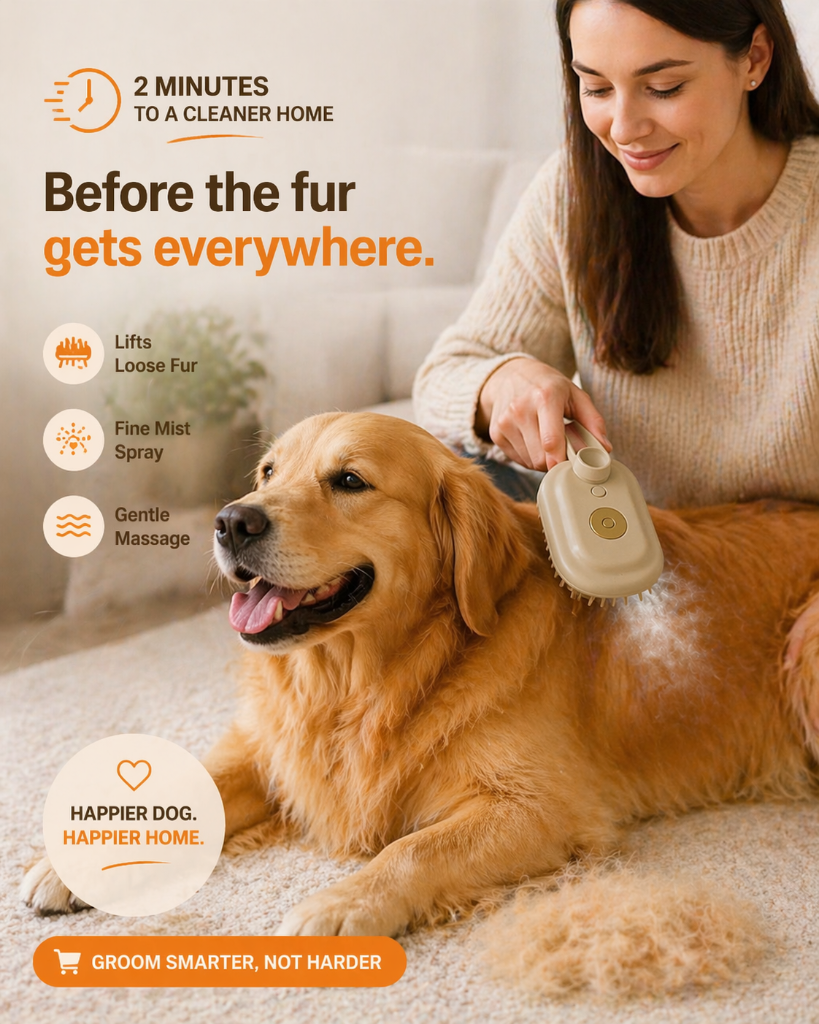
Ultrasonic Pet Tooth Cleaner
Silent ultrasonic vibrations remove plaque without brushing. Breaks up the bacterial biofilm that causes bad breath at the source.

Pet Dental Supplement
CoQ10, omega-3s, and zinc target inflammatory pathways driving gum disease from the inside out. Systemic oral health support.